Poltava district combines the regional centre on the Vorskla with the Poltava Battlefield, Gogol’s Dykanka, the pottery village of Opishnia and Reshetylivka, famous for its embroidery. It is easy to plan a route here for one day or for several.
What to see
Ready routes
Upcoming events
Where to stay
Poltava District — Poltava, Dykanka, Opishnia and Reshetylivka
The Heart of Poltava Region
Poltava district was formed in 2020. Its administrative centre is the city of Poltava, the regional centre on the banks of the Vorskla. Other towns and settlements of the district include Dykanka, Opishnia, Reshetylivka, Kobeliaky, Karlivka and Novi Sanzhary.
Poltava — a City on the Vorskla
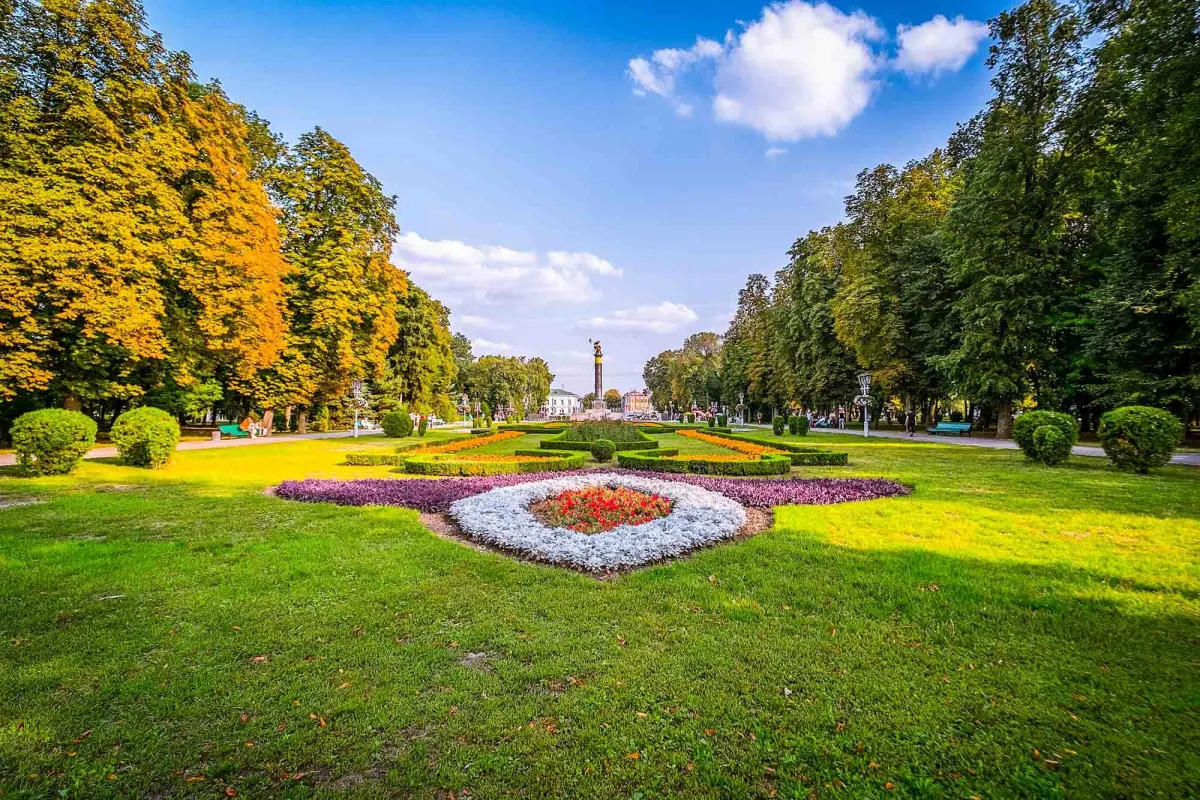
The heart of Poltava is the Korpusnyi Garden with the Monument of Glory, from which the city’s main streets radiate. The White Arbour offers a wide view of the Vorskla valley, and the Exaltation of the Holy Cross Monastery stands on a hill above the river. The Vasyl Krychevskyi Poltava Local History Museum occupies the former provincial zemstvo building — an outstanding example of Ukrainian Art Nouveau architecture. Ivan Kotliarevskyi, the author of “Eneida” and “Natalka Poltavka”, lived and worked in the city, and his museum-estate is open here.
The Poltava Battlefield
The Battle of Poltava took place on the northern outskirts of the city in 1709. Today it is home to the Poltava Battlefield National Museum-Reserve: a museum of the history of the battle, monuments and a mass grave on a spacious territory that is pleasant for walking.
Dykanka, Opishnia and Reshetylivka
Dykanka is known to everyone thanks to Nikolai Gogol’s “Evenings on a Farm Near Dykanka”. The Triumphal Arch, a landmark of the Kochubei estate, has survived here.
Opishnia is the capital of Ukrainian pottery. It is home to the National Museum-Reserve of Ukrainian Pottery, and local craftsmen continue the old tradition of Opishnia ceramics: you can watch a jug being made and try to shape your own.
Reshetylivka is famous for its “white on white” embroidery and carpet weaving — a piece by local craftsmen makes a fine souvenir.
Read moreHide
Frequently Asked Questions
For one day it is convenient to choose one direction: Poltava (the Korpusnyi Garden, the White Arbour, the Exaltation of the Holy Cross Monastery, the Poltava Battlefield) or a trip to Dykanka and Opishnia. Reshetylivka is easy to add to a weekend route.
The Battle of Poltava of 1709 took place on the northern outskirts of Poltava. Today the Poltava Battlefield National Museum-Reserve operates here, with a museum, monuments and a mass grave.
Opishnia is one of the best-known centres of Ukrainian pottery. It is home to the National Museum-Reserve of Ukrainian Pottery, workshops, pottery festivals and workshops for visitors.
Dykanka was made famous by Nikolai Gogol’s “Evenings on a Farm Near Dykanka”. The Triumphal Arch of the Kochubei estate has survived here, and the village is easy to combine with a trip to Opishnia or Poltava.
Reshetylivka is one of the centres of Ukrainian embroidery and carpet weaving. Its “white on white” embroidery is especially famous.
By car — along the M-03 Kyiv — Kharkiv highway via Pyriatyn and Lubny. Trains and buses run between Kyiv and Poltava; check the current train timetable on the Ukrzaliznytsia website.