Over 500 years of history on the Vorskla: results of the archaeological season in Hlynske
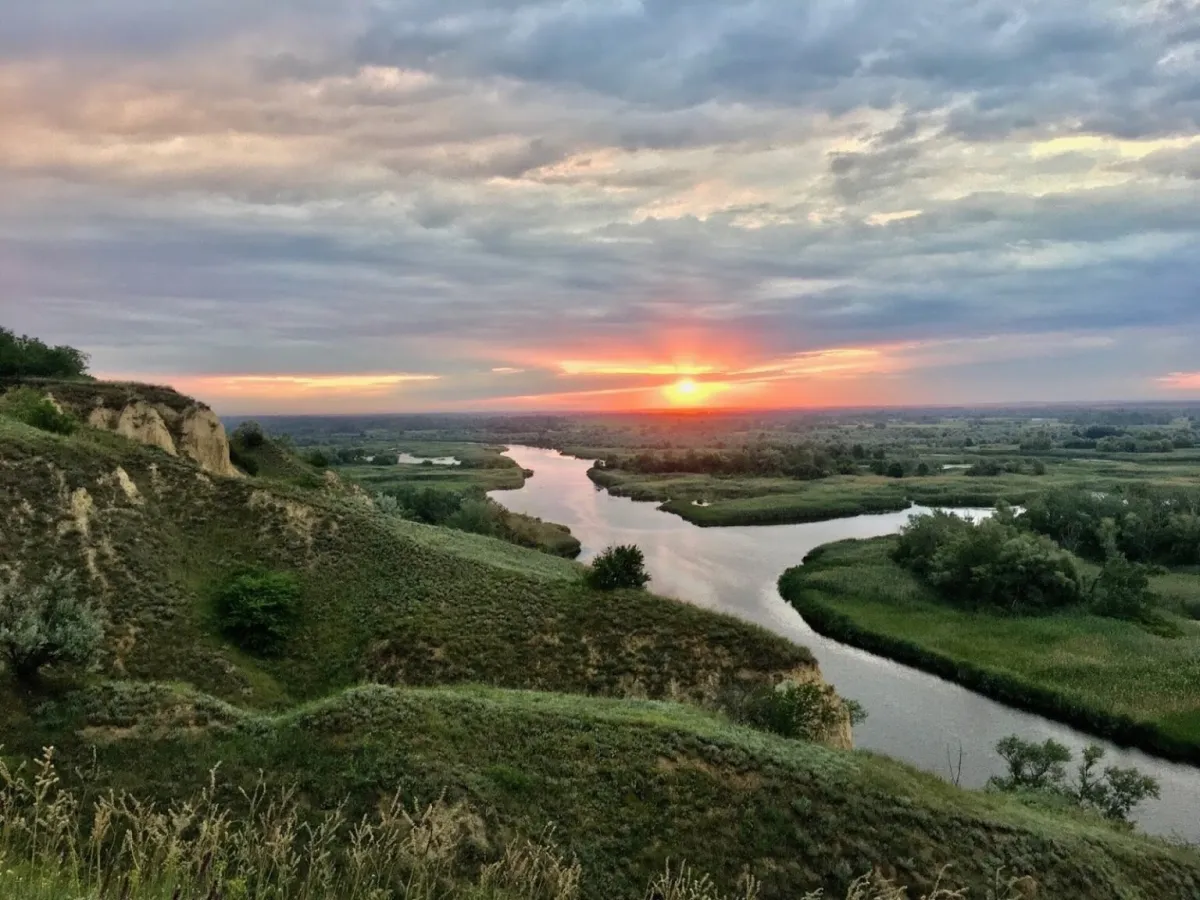
Source: Poltavshchyna
The sixteenth field season of the archaeological expedition of the Bilsk Historical and Cultural Reserve has ended in Poltava Region. This year’s research, led by the institution’s leading researcher Yurii Puholovok, PhD in History, shed light on the region’s history from the times of Rus in the 10th–11th centuries to the late Middle Ages of the 15th century.
The excavations uncovered new household and production features, ancient burials and several thousand artifacts.
One of the most notable finds of the season was a hoard of 118 copper Horde puls. The coins lay in a compact cluster in a small pit. Thanks to detailed analysis and soil flotation, the scientists found perforated pieces of amber and remnants of leather next to the coins. This indicates that the hoard was kept in a leather pouch or purse. According to the scientists’ estimates, the money was hidden at the end of the 14th century, during a period of political instability. The researchers stress the need to further study the context of the find before linking it to the Battle of the Vorskla River of 1399.
Archaeologists emphasize that the key thing in excavations is the context in which artifacts lie. To reconstruct an accurate picture of the past, researchers use modern methods, including satellite navigation, aerial survey using LIDAR technology, microrelief analysis and laboratory flotation.
The geography of the finds confirms that in the Middle Ages the Vorskla served as a communication and trade corridor between the Steppe and the Forest-Steppe, Rus, the Golden Horde, the Grand Duchy of Lithuania, Central Europe and Crimea. This is evidenced by the variety of coins found, including clipped Kufic dirhams, silver and copper coins of the Golden Horde, Prague groschen, coins of the Grand Duchy of Lithuania from the time of Prince Vytautas, as well as Crimean Tatar akçe of the Giray dynasty. Materials from the 14th–15th centuries prove that life in these lands did not stop after the Mongol invasion.
The household pits, everyday pottery, jewelry and weapon parts that were found make it possible to study the daily life, work and military life of the inhabitants. Burials from the 11th and 14th–15th centuries became part of the research. Anthropological analysis of the remains makes it possible to determine the sex, age, health, diseases and level of physical exertion of people of that time. Among the finds are also items of personal faith, including a fragment of a reliquary cross and a pectoral cross from a later child burial.
Ahead, the scientists face laboratory processing of the materials, including pottery restoration, numismatic research, anthropological examinations and analysis of spatial data. The main value of the Hlynske archaeological complex lies in the opportunity to study the almost continuous history of one region over several centuries.
Yan PRUHLO, Poltavshchyna
More articles