A foreign expedition works at the Bilsk hillfort for the first time in 20 years
Source: ZMIST
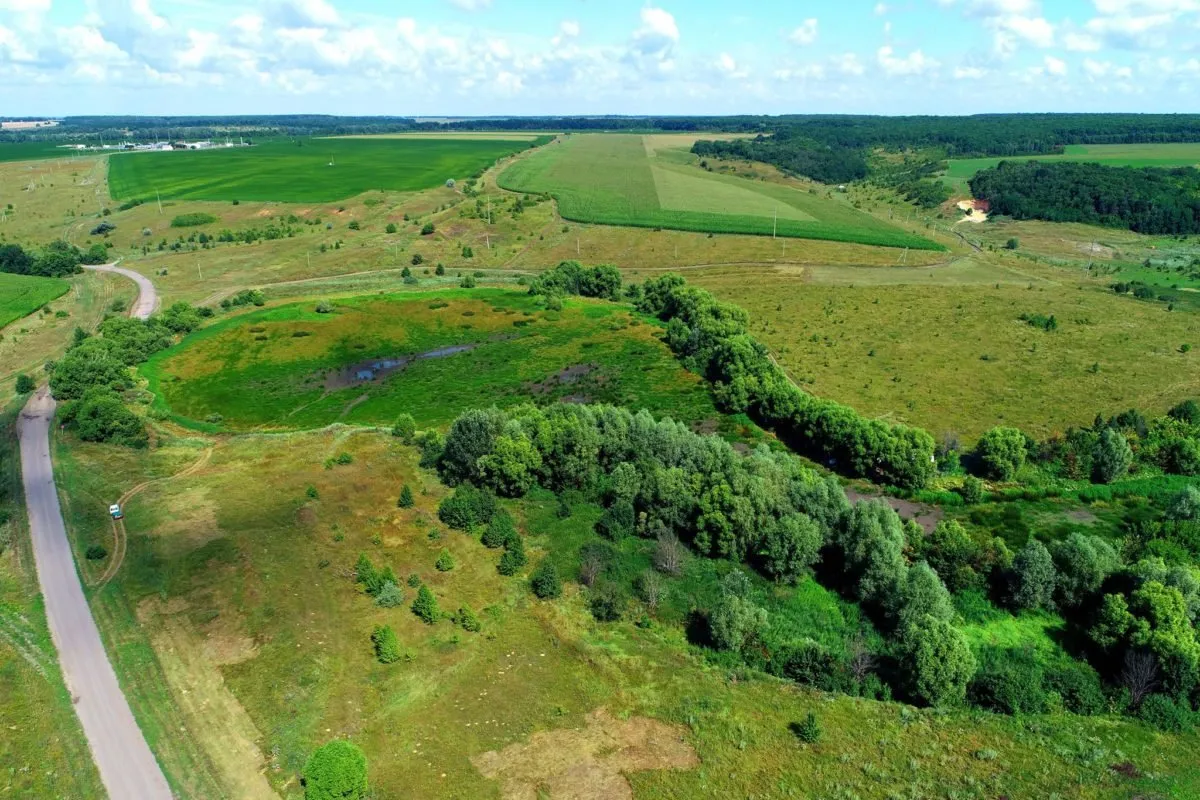
A large-scale geophysical survey of the Bilsk hillfort and other archaeological sites has been carried out. Specialists surveyed almost 90 hectares without large-scale excavations.
For the first time in 20 years, a foreign expedition has worked at the Bilsk hillfort. The survey was conducted by the German company Eastern Atlas, which specializes in geophysical methods in archaeology. This was reported by the Bilsk Historical and Cultural Reserve on October 2.
In particular, the specialists used magnetometry, a method that makes it possible to detect underground features and soil characteristics based on changes in the magnetic field. During the work, the researchers surveyed the entire interior area of the Western Fortification of the Bilsk hillfort, as well as part of the Skorobir necropolis, which dates back to the Scythian period.
Magnetometric surveys make it possible to obtain information about what lies beneath the ground surface without the need for continuous excavation. Thanks to this, archaeologists can study large areas and identify the places that may be of greatest interest for further excavations.
The Bilsk hillfort is considered one of the largest archaeological complexes of the Scythian period. It is associated with ancient Gelonus, mentioned by the ancient Greek historian Herodotus.
As a reminder, during the study of the Hlynske archaeological complex, archaeologists discovered a hoard of 118 copper pul coins from the post-Mongol period. It may have been hidden at the end of the 14th century, a period of political and military instability.
The 118 coins lay compactly in a small pit in a part of the excavation where there were no other archaeological features. According to the researchers’ preliminary version, they may have been deliberately left in a pouch or other organic container. It has not survived to our time.
The coins are puls, copper coins of the post-Mongol period. Their exact origin, minting date and other characteristics are yet to be determined by further research. Archaeologists preliminarily date the concealment of the hoard to the end of the 14th century. This was a period of political and military instability. One of the key events of that time was the Battle of the Vorskla River in 1399.


More articles