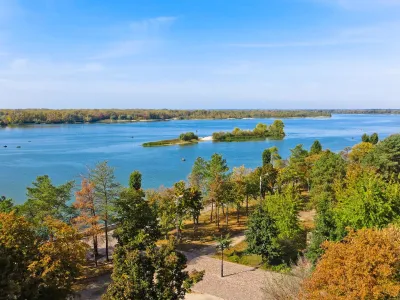
The men’s monastery on the bank of the Sula River in the village of Mhar, Lubny Raion, was built in 1619.
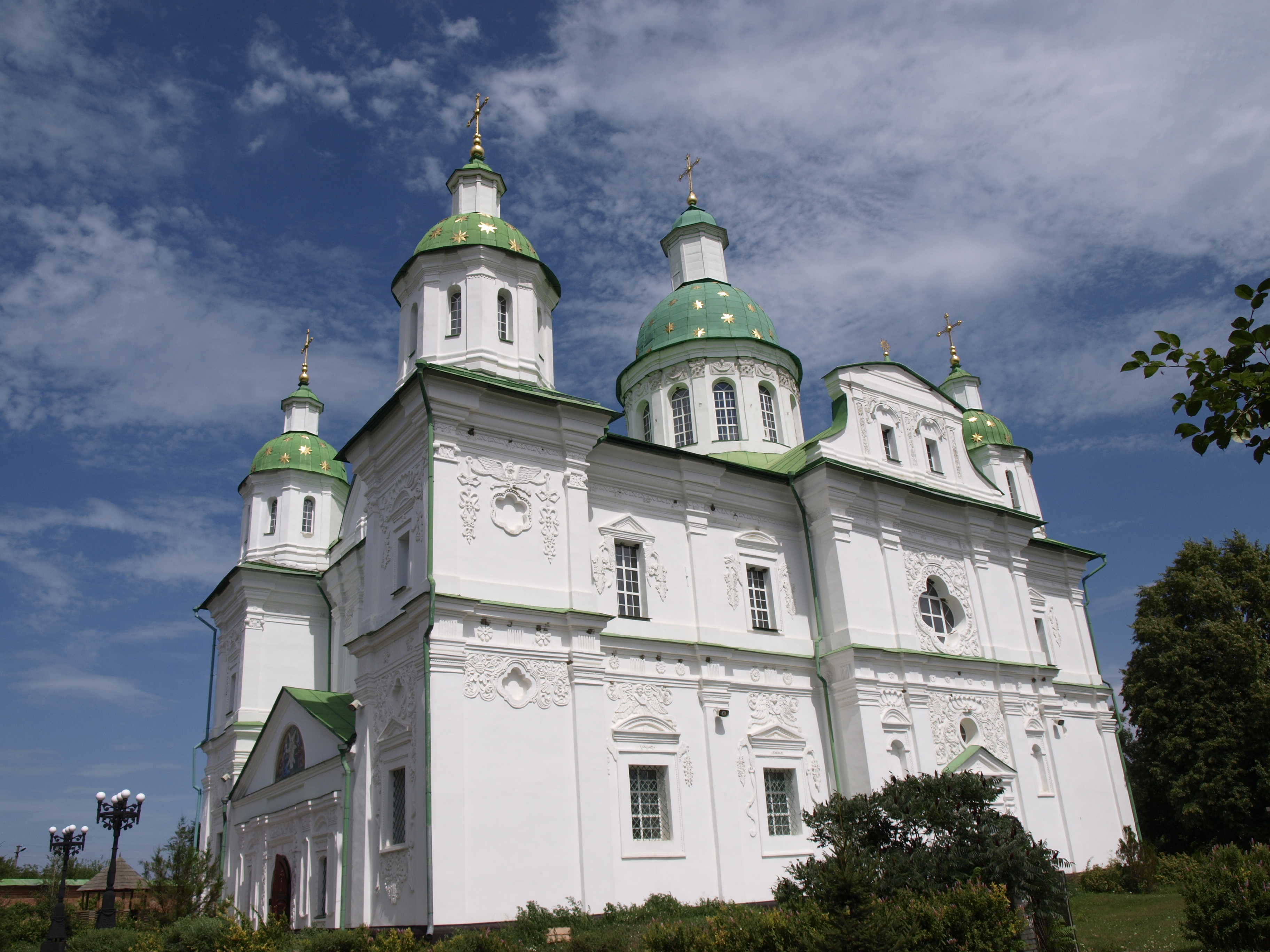
It was founded with the support of Metropolitan Isaia Kopynskyi of Kyiv and Princess Raina Vyshnevetska, the sister of Petro Mohyla. A monastery is believed to have existed here as early as the times of Kyivan Rus. The main building of the complex, the Transfiguration Cathedral, was erected in 1692 with funds from Hetmans Samoilovych and Mazepa to a design by the architect Johann Baptist Sauer, who is best known for designing the Trinity Cathedral in Chernihiv.
The building has rich stucco moldings with floral ornaments and is a superb example of Cossack Baroque architecture. The three-tier Classicist bell tower was built later, in 1785. According to legend, this was the favorite place of the Patriarch of Constantinople, Athanasius of Lubny, who was canonized as a saint. His relics, kept in the monastery until the early 20th century, are believed to have miraculous power.
The grounds of the Mhar Monastery also include the Church of St. Athanasius, the abbot’s house and 18th-century cells that formed a skete with its own Church of the Annunciation.
In 1622 Isaia Kopynskyi established a brotherhood here to counter the conversion of the population to Catholicism. In the 17th century the monastery’s inhabitants were mostly Cossacks, among them Yurii, the son of Bohdan Khmelnytskyi.
The Mhar Monastery was favored by many hetmans and cultural figures who often visited it and made donations for its development, among them Ludwig Dant, the Prince of Hesse-Homburg, Peter I, A. Pushkin, T. Shevchenko and others.
In 1919 the Soviet authorities shot the monastery’s inhabitants, and the premises began to be used for various purposes. In Soviet times, in particular, it housed a juvenile colony, a disciplinary battalion, military warehouses and a children’s camp. The monastery was revived only in 1993.
Opening hours: Daily from 8:00 to 18:00